tess

Why Forgetting Is Now Your Superpower
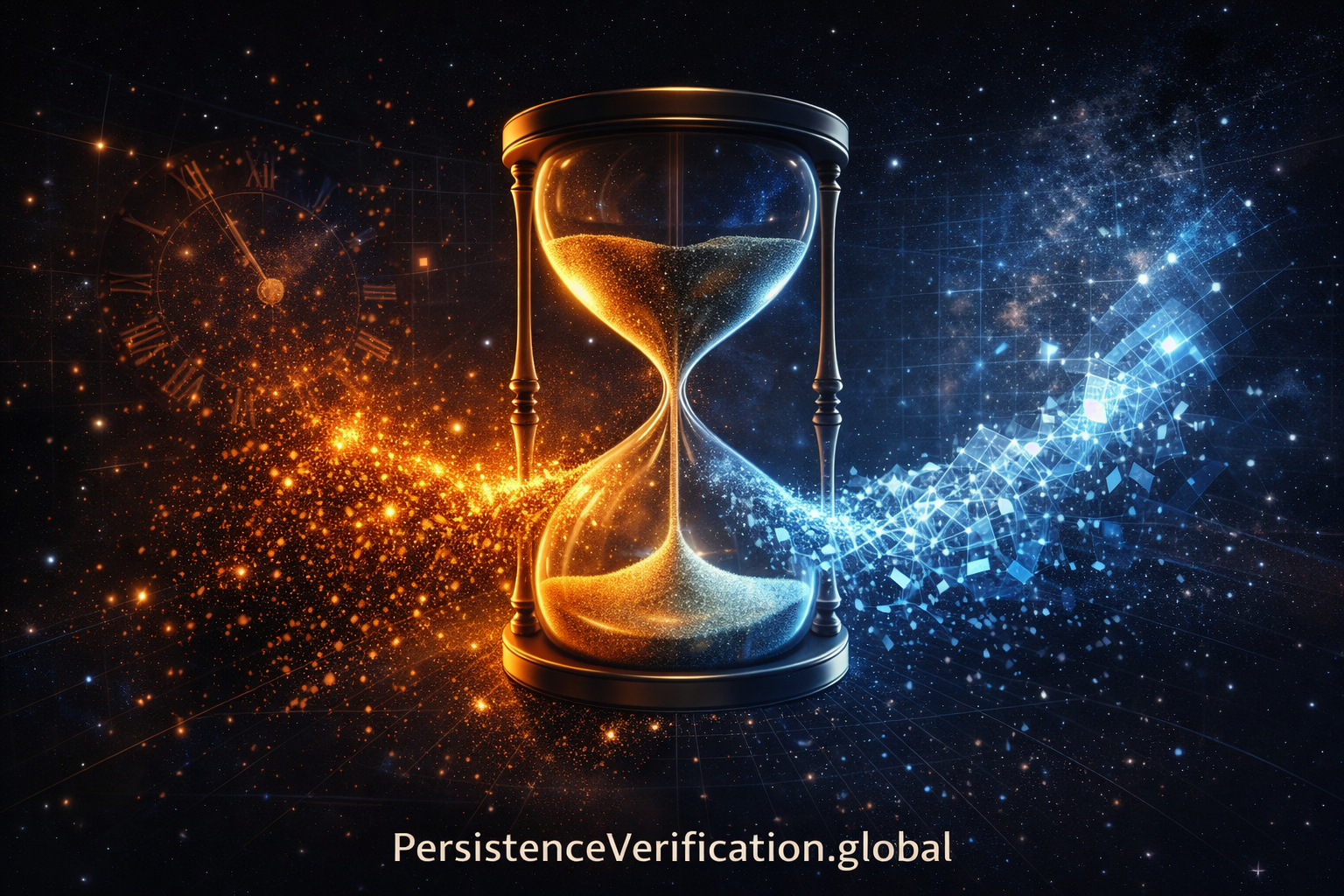
Temporal verification of learning showing how genuine knowledge persists over time while borrowed performance collapses

When machines achieved perfect instant performance, biological memory became the last unfakeable signal A software engineer spent three months building an application with AI assistance. The AI generated functions, debugged errors, suggested optimizations. Every piece worked perfectly. The engineer submitted the project, received praise, got promoted. Six months later, the codebase needed modification. Without AI Why Forgetting Is Now Your Superpower
The World Is Running on Unprovable People

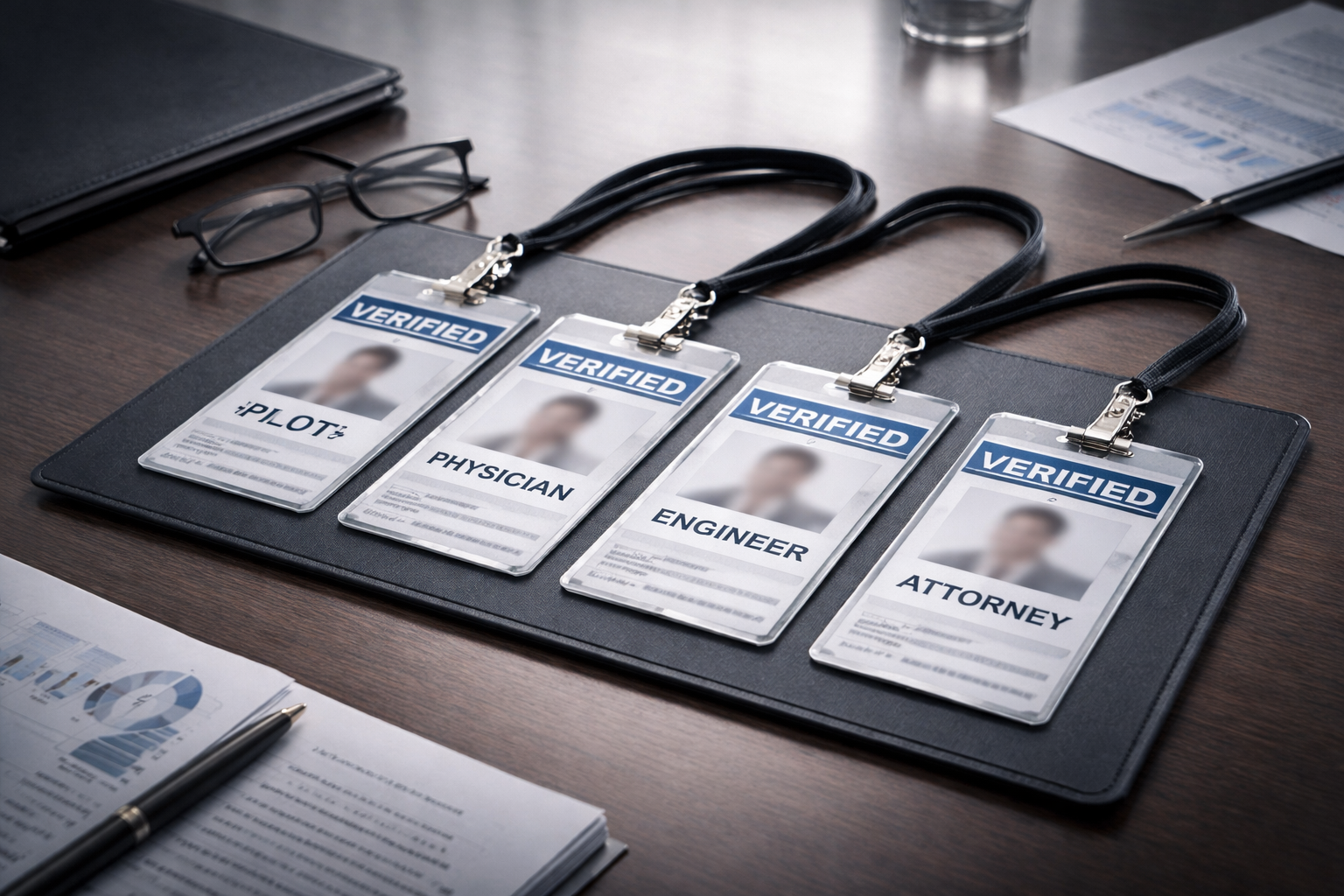
Four professional ID badges marked VERIFIED showing blurred faces of pilot, physician, engineer, and attorney—illustrating unprovable competence despite credentials

Every morning, millions of people board aircraft piloted by individuals whose competence cannot be verified. Millions more undergo medical procedures performed by professionals whose capability remains structurally unprovable. Critical infrastructure operates under supervision of engineers whose expertise has become unfalsifiable. Legal systems function through attorneys and judges whose understanding cannot be distinguished from synthesis access. The World Is Running on Unprovable People

Why the Future Cannot Verify Its Own Present

Documents marked UNVERIFIABLE showing failed capability verification and temporal resolution across multiple verification logs

For most of recorded history, civilizations relied on a foundational assumption: that time would reveal truth. The corrupt official would eventually be exposed. The genuine innovator would be recognized. The fraud would collapse under scrutiny. Wait long enough, and reality would separate from pretense. This assumption held not because time possessed mystical properties, but because Why the Future Cannot Verify Its Own Present

The Last Proof: Why Time Is the Only Unfakeable Signal in the Synthesis Age

Synthesis can generate perfect performance. Expert-level writing, sophisticated reasoning, flawless execution, credible expertise—all producible on demand without the capability that performance supposedly demonstrates. This creates civilization’s defining question: when AI makes all momentary signals fakeable, what remains as proof? The answer is singular and unavoidable: time. Not time as duration. Not time as deadline. Time The Last Proof: Why Time Is the Only Unfakeable Signal in the Synthesis Age

The Verification Crisis: Why Society No Longer Knows Who Can Actually Do Anything

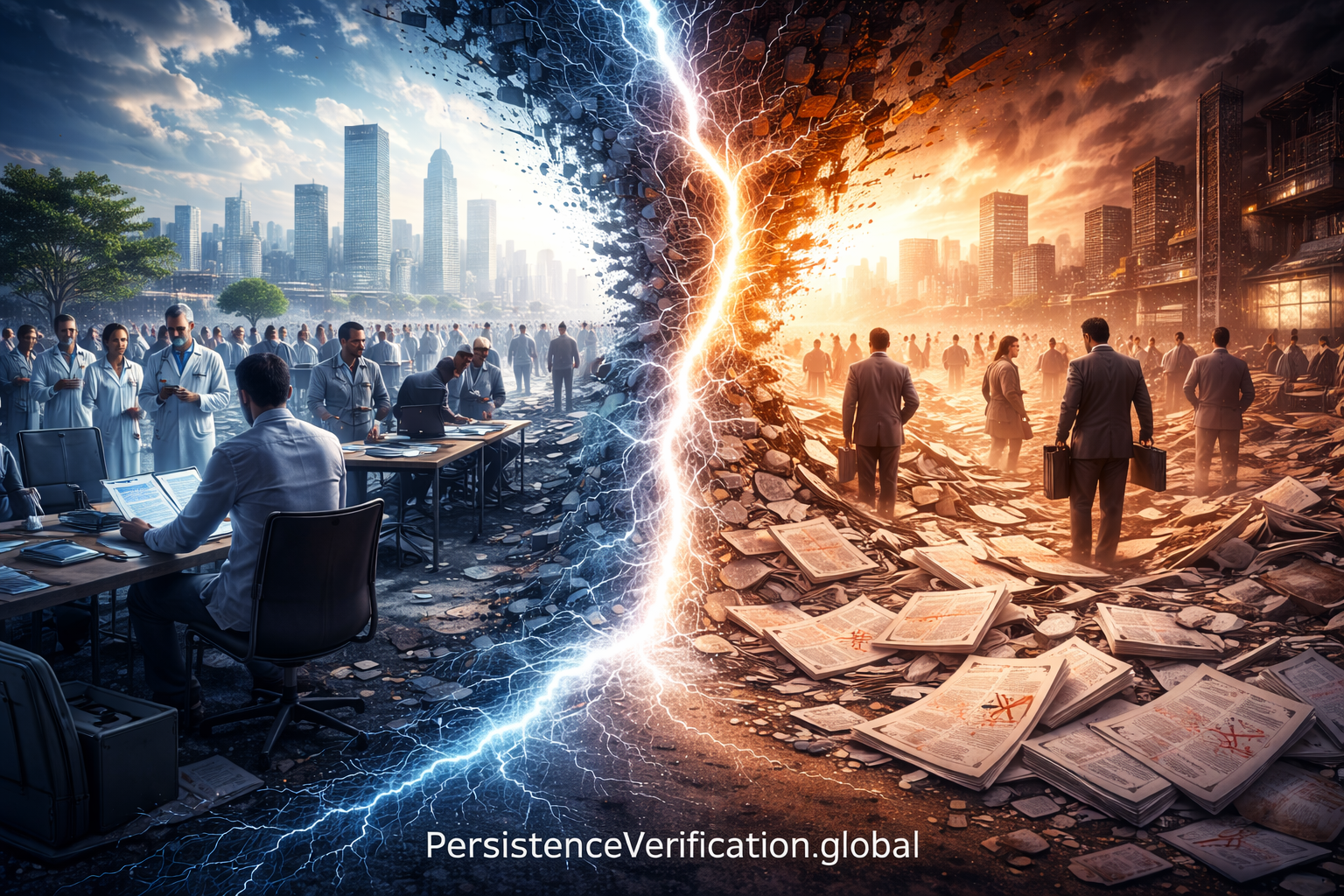
Split image showing healthcare and business professionals in ordered environment on left transitioning through lightning to chaotic credential collapse on right, illustrating civilization-wide verification infrastructure failure

Modern civilization operates on a foundational assumption so basic that stating it explicitly feels unnecessary: when critical systems require expertise, we can verify who possesses that expertise before granting them authority over those systems. This assumption no longer holds. We have lost the infrastructure enabling capability verification at scale. Not degraded it. Not made it The Verification Crisis: Why Society No Longer Knows Who Can Actually Do Anything

The End of Assessment: Why All Performance-Based Evaluation Is Now Structurally Meaningless

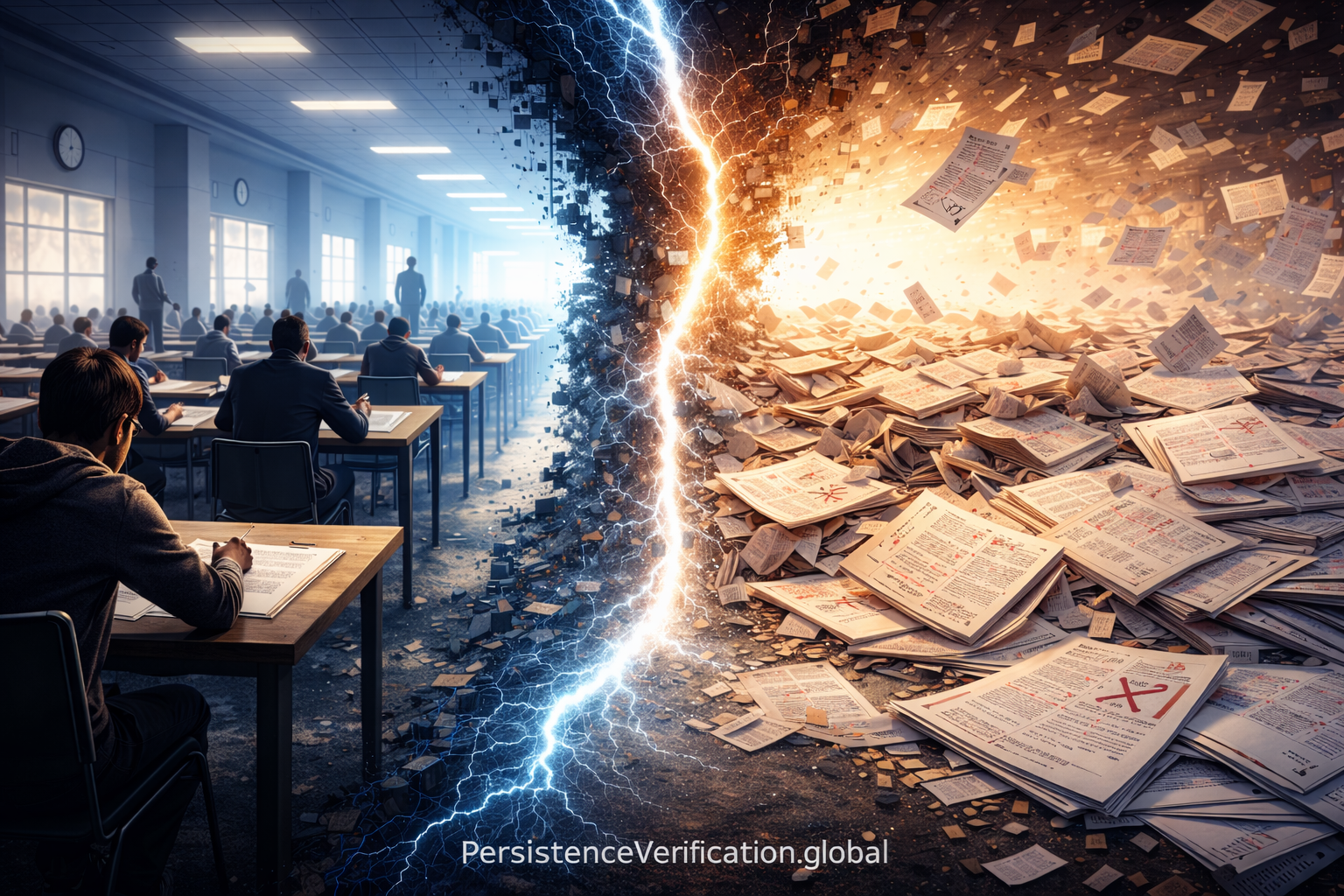
Split image showing examination room on left transitioning through lightning bolt to exploding test papers on right, illustrating categorical collapse of assessment infrastructure in 2024

Assessment did not gradually decline as AI improved. It did not face mounting pressure requiring adaptation. It did not encounter challenges demanding better methodology. Assessment collapsed as a coherent category in 2024. This is not hyperbole. This is not alarmism. This is structural description of what happened when AI crossed the capability threshold where generating The End of Assessment: Why All Performance-Based Evaluation Is Now Structurally Meaningless

When Performance Becomes Free, Learning Becomes Invisible

Student studying alone in vast library with empty desks and open books, illustrating how AI makes learning invisible while completion metrics show success

For two centuries, the ability to perform a task well signaled that someone had learned to do it. This assumption—implicit, universal, structural—organized how we hired, certified, credentialed, and allocated human capital across civilization. It was never perfect. But it worked because producing sophisticated performance required possessing the capability that performance demonstrated. That coupling broke between When Performance Becomes Free, Learning Becomes Invisible